
Canon RF vs EF: Ultimate Lens Showdown — Which One Is Right for You?
By GK Vale Cameras · Last updated
Canon RF vs EF, in one answer: EF lenses are made for Canon DSLRs, while RF lenses are made for Canon EOS R mirrorless cameras. EF lenses also work on RF cameras with Canon’s adapter. However, RF lenses don’t fit EF cameras at all. So if you’re buying a new Canon camera today, choose RF.
The Canon RF vs EF question usually comes up at one of two moments. Either you’re buying your first Canon, or you already own DSLR lenses and want a mirrorless body. In both cases, the worry is the same: will you buy the wrong thing?
Thankfully, Canon made the RF vs EF switch fairly easy. So below, you’ll see what changed between the two mounts and what it means for your photos. Then you’ll know when to buy RF, keep EF or use both.
Still deciding between DSLR and mirrorless in general? In that case, read our DSLR vs mirrorless camera comparison first, because this page focuses on the lenses.
Key takeaways
- EF is Canon’s DSLR lens mount from 1987, while RF is its mirrorless mount from 2018.
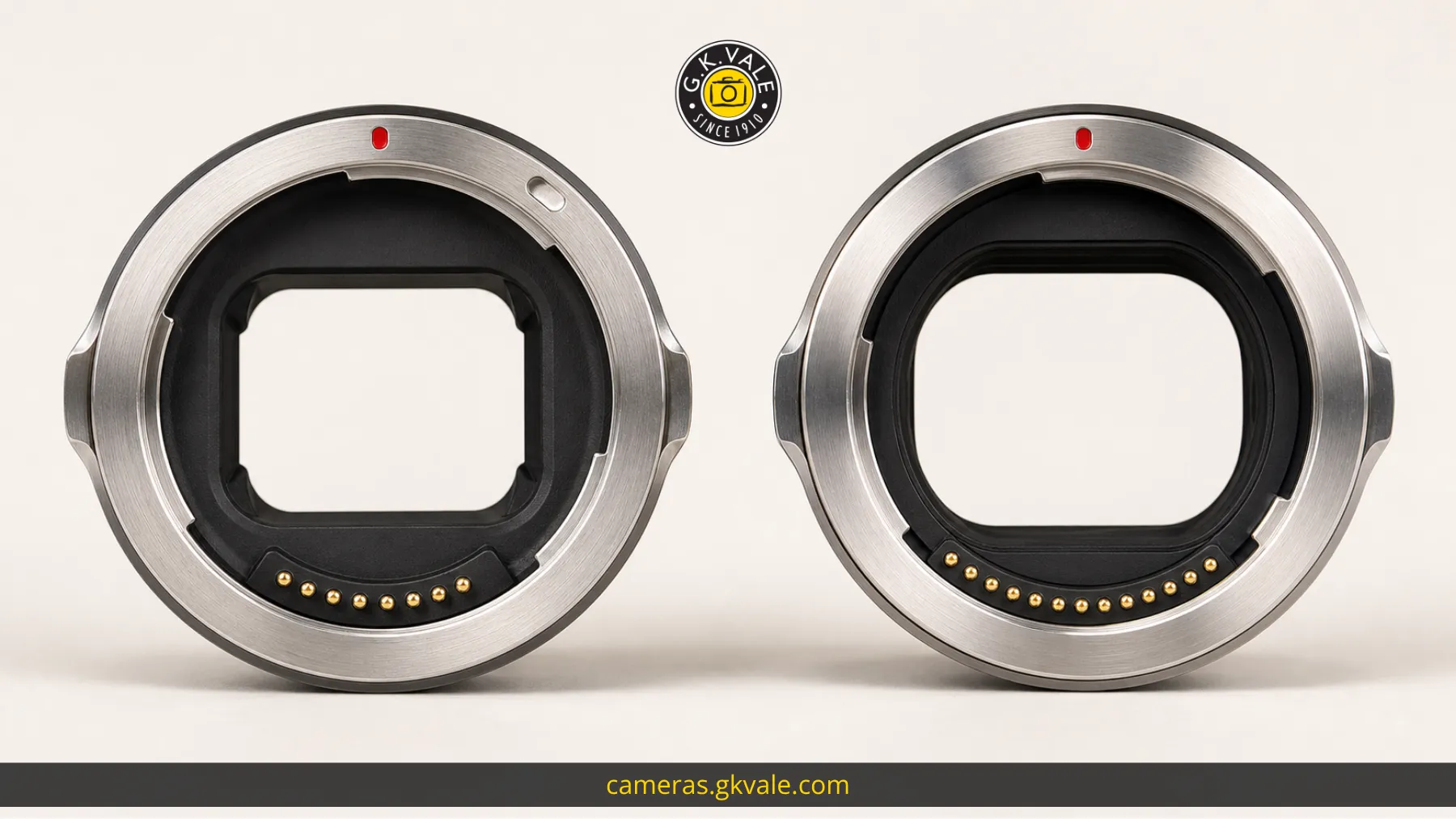
- Both mounts are 54mm wide. However, RF sits 20mm from the sensor (EF: 44mm) and has 12 pins instead of 8.
- EF and EF-S lenses also work on RF cameras with a Canon EF-EOS R adapter, so autofocus and stabilisation keep working.
- On the other hand, RF lenses don’t fit EF cameras, and EF-M lenses can’t be adapted either.
- In short: buying new? Go RF. Keeping a DSLR? Then stick with EF.
Canon RF vs EF: What’s the Difference?
The main Canon RF vs EF difference is the camera each lens fits. EF lenses fit Canon DSLRs, whereas RF lenses fit Canon EOS R mirrorless cameras. Both mounts have the same 54mm opening. Still, the RF mount sits much closer to the sensor and has more pins, so the lens and camera share more data, faster. In fact, Canon covers the same points in its own RF vs EF lens guide.
| Feature | EF mount | RF mount |
|---|---|---|
| Launched | 1987 | 2018 |
| Made for | EOS DSLRs | EOS R mirrorless and some Cinema EOS cameras |
| Opening | 54mm | 54mm |
| Flange distance | 44mm | 20mm |
| Pins | 8 | 12 |
| Crop-sensor version | EF-S | RF-S |
| Control ring | No (one adapter adds it) | On many lenses |
| Fits the other system? | Yes, with an adapter | No |
| New lenses | Very few | Canon’s main focus |
What Are Canon EF Mount Lenses?
Canon EF lenses are lenses built for Canon’s EOS DSLR cameras. EF stands for Electro-Focus. Canon launched the mount in 1987, and it was fully electronic from the start. In other words, small electrical contacts, not levers, control focus and aperture.
Because the mount lasted over 30 years, the range grew huge. For example, Canon Australia says the EF range has over 70 lenses, from 8mm to 800mm. Sigma, Tamron, Tokina and Samyang made EF lenses too. As a result, EF glass is still easy to find, especially second-hand.
EF-S and EF-M: How They Fit Into Canon RF vs EF
EF-S and EF-M are related Canon mounts, but they aren’t the same as EF. Here’s how to tell them apart:
- EF-S lenses are for crop-sensor (APS-C) Canon DSLRs, such as the EOS 200D or EOS 90D. However, they don’t fit full-frame EF bodies.
- EF-M lenses, on the other hand, were for Canon’s older EOS M mirrorless cameras. That mount is separate, so it can’t be adapted to RF.
What Are Canon RF Lenses?
Canon RF lenses are built for the EOS R mirrorless system. Canon announced it in September 2018, together with the first EOS R. Since then, every EOS R camera has used the RF mount, from the small EOS R100 to the EOS R5 Mark II. Several Cinema EOS cameras use it too, such as the EOS C70, C80 and C400.
Today, Canon’s new lenses are mostly RF. So if you’re starting fresh with Canon, this is the system that’s still growing.
What Are RF-S Lenses?
RF-S lenses are RF lenses made for Canon’s crop-sensor mirrorless cameras, such as the EOS R7, R10, R50 and R100. You can also put one on a full-frame RF body. In that case, the camera crops the image automatically. As a result, you still get a usable photo, though at a lower resolution.
What Are the Key Canon RF vs EF Differences?
Four things separate the two mounts: the flange distance, the pins, the mount size and the control ring. In the Canon RF vs EF comparison, two of these change what lenses can do. Meanwhile, one explains why adapters work so well. Finally, the last one changes how the lens feels in your hand.
Flange Distance: The Biggest Canon RF vs EF Change
Flange distance is the gap between the lens mount and the sensor. It’s 44mm on EF but only 20mm on RF. A DSLR needs the longer gap because its mirror flips up in front of the sensor. Mirrorless cameras, however, have no mirror. So Canon could move the mount much closer.
This shorter gap matters because designers can place the rear glass closer to the sensor. That makes new lens designs possible. For example, Canon Asia points to the RF 28-70mm f/2L USM, a zoom that stays at f/2 across its whole range.
Electronic Contacts: 8 Pins vs 12 Pins
EF lenses talk to the camera through 8 pins. In contrast, RF lenses use 12 pins and a faster link, as Canon New Zealand notes. You won’t see the extra pins in your photos. Still, you’ll feel them when you track a moving subject, shoot video or rely on lens corrections.
Mount Diameter: Why Canon Kept 54mm
Canon kept the same 54mm opening on both mounts. That’s why EF lenses adapt so well. The adapter is basically a 24mm spacer that passes the signals straight through. Therefore, an EF lens sits exactly 44mm from the sensor, just as it did on a DSLR.
Control Ring: An RF-Only Extra
Many RF lenses also have a control ring. You can set it to aperture, shutter speed, ISO or exposure compensation. That way, you change settings without lowering the camera from your eye. EF lenses don’t have this ring. However, one Canon adapter adds it.
Can You Use EF Lenses on a Canon RF Camera?
Yes. Canon EF and EF-S lenses work on Canon RF cameras with a Canon Mount Adapter EF-EOS R. Autofocus and image stabilisation keep working too. In fact, Canon made EF support a must-have when it designed the RF mount. Its TS-E tilt-shift and MP-E macro lenses are supported as well. So there’s no need to sell your EF lenses the day you buy a mirrorless body.
Which Canon RF vs EF Adapter Should You Buy?
Buy the standard adapter if you just want your EF lenses to work. Then pay more only if you’ll use the control ring or drop-in filters.Canon Europe lists three versions:
| Adapter | What it adds | Best for |
|---|---|---|
| Mount Adapter EF-EOS R | Mount conversion with full autofocus | Most photographers |
| Control Ring Mount Adapter EF-EOS R | A control ring you can set up | RF-style handling on EF lenses |
| Drop-In Filter Mount Adapter EF-EOS R | A slot for ND, polariser or clear filters | Video, and wide lenses that can’t take front filters |
None of these adapters has glass inside. Therefore, they don’t change how sharp your lens is.
Do EF-S Lenses Work on RF Cameras?
Yes, EF-S lenses work on RF cameras with the same adapters. On a full-frame body like the EOS R6 Mark II, though, the camera switches to crop mode and saves smaller files, as Canon UK explains. Meanwhile, on a crop-sensor body like the EOS R7 or R10, they work just as they would on a DSLR.
Which Lenses Can’t Be Adapted?
EF-M lenses can’t be adapted to RF. That’s because their mount sits 18mm from the sensor, which is closer than RF’s 20mm. As a result, there’s no room for an adapter. Older third-party EF lenses can also be hit and miss. Most work fine. Still, check the maker’s notes before you trust one on a paid shoot.
Can You Use RF Lenses on a Canon EF Camera?
No. RF lenses can’t be mounted on Canon EF DSLRs, and no adapter changes that. An RF lens is made to sit 20mm from the sensor. A DSLR’s mount, however, sits 44mm away. So the lens would sit too far forward to focus properly. Besides, the mount shape and pins don’t match anyway.
That’s the one Canon RF vs EF rule with no exceptions. If you’re keeping your DSLR, buy EF. Only buy an RF lens “for later” when a mirrorless body is truly on its way.
Canon RF vs EF Image Quality: Are RF Lenses Always Better?
Not always. The honest Canon RF vs EF answer is that it depends on the lens. A newer RF lens is often sharper, lighter or quicker to focus than the EF lens it replaced. Even so, Canon’s EF L-series lenses are still excellent. In fact, many working photographers use them on EOS R bodies every day.
Adapting even brings a small bonus. EOS R cameras focus using the sensor itself. As a result, adapted EF lenses don’t need the focus fine-tuning that some DSLR pairings needed.
Where RF pulls ahead
- Fast zooms are often smaller and lighter in RF.
- Autofocus works best when you pair RF lenses with the latest EOS R bodies.
- Video also benefits, especially from smooth, quiet focusing.
- Finally, lens and body stabilisation can work together on supported pairs.
Where EF still makes sense
- You already own good EF lenses.
- A special lens, like a tilt-shift or an older long telephoto, is easier to find used in EF.
- Your budget is tight, because used EF lenses often cost less than RF ones.
Canon RF vs EF: Which Mount Should You Choose?
Choose RF if you’re buying a new Canon camera today. After all, it’s the current system, and it still runs EF lenses through an adapter. On the other hand, choose EF if you’re keeping a Canon DSLR or want cheaper used lenses to adapt later.
| Your situation | Best choice | Why |
|---|---|---|
| First Canon camera | RF (or RF-S for APS-C) | New Canon bodies and lenses are going this way |
| Keeping your DSLR | EF lenses | RF lenses won’t fit your camera |
| Moving to mirrorless | RF body plus adapted EF lenses | Keep your lenses and replace them slowly |
| Video or hybrid work | RF lenses, or EF on a filter adapter | Better focus and ND filters behind the lens |
| Fast prime, small budget | Used EF prime on an adapter | A cheap route to wide apertures |
| Unsure about a lens | Rent before you buy | Test it on your own camera first |
Buying your very first camera and still comparing brands? Then see our best camera for beginners guide. It also covers the Canon EOS R50 and R100, alongside Nikon, Sony and Fujifilm.
What Mistakes Do People Make With Canon RF vs EF Gear?
Most mistakes happen because people assume every Canon lens fits every Canon camera. Here are six to watch for:
- Buying an RF lens for a DSLR. It won’t mount, so check the mount before you pay.
- Choosing a cheap adapter with no pins. Without them, you can lose autofocus and aperture control.
- Assuming EF-M lenses will adapt. Unfortunately, they won’t.
- Forgetting the crop. EF-S and RF-S lenses on a full-frame RF body give smaller files.
- Selling every EF lens at once. Instead, adapt first, then replace only the lenses that hold you back.
- Skipping checks on used EF lenses. Look for fungus, haze and noisy focus motors, especially after a humid Bengaluru monsoon.
Should You Rent Before Switching From EF to RF?
Renting first makes sense when you’re unsure whether an RF lens beats the EF lens you already own. For example, shoot the same scenes with both over a weekend. Then the difference in focus, weight and sharpness becomes clear, or it doesn’t.
If you already know what you want, simply buy it. However, if you’re still comparing, rent camera gear in Bangalore and decide with real photos in hand.
Where Can You Compare Canon RF vs EF Gear in Bangalore?
The quickest way to decide is to try your own EF lens on an EOS R body. So bring it to any GK Vale store in MG Road, Indiranagar, Jayanagar or Gandhinagar. There, you can mount it on an adapter and compare it with the RF version. Also, as an authorised Canon dealer, we sell every camera and lens with an India warranty and a GST invoice.
Want to look first? Then browse the Canon cameras and lenses we stock. Or, if you’re still picking a system, start with our camera buying guide.
The Verdict: Canon RF vs EF, Which Is Right for You?
If you’re buying into Canon now, go RF. After all, it’s the system Canon is building, and the adapter means you lose almost nothing by leaving EF. On the other hand, if you’re happy with your DSLR, EF lenses are still a smart, affordable choice. Besides, they’ll come with you if you switch later.
In the end, most photographers never have to settle Canon RF vs EF for good. Simply pick the body that suits your work, adapt what you already own, and then add RF lenses as your needs grow.
Not sure which lens to keep or upgrade?
Bring your EF lenses and tell us what you shoot. Then try them on an EOS R body before you decide.
Four stores across Bangalore
Mon–Sat, 9:30 AM – 8:30 PM
Canon RF vs EF: Frequently Asked Questions
Do EF lenses lose image quality on an RF camera?
No. Canon’s EF-EOS R adapters have no glass inside. Instead, they hold the EF lens at its correct 44mm distance from the sensor and pass the signals straight through. As a result, your EF lens gives the same image quality on an EOS R camera as on a DSLR. Autofocus and stabilisation keep working too.
Is the Canon EF mount discontinued?
Canon now focuses new lens launches on RF, so new EF lenses are rare. However, existing EF lenses still work, are easy to find used and adapt to RF cameras with Canon’s adapters. To see which EF lenses are still sold new in India, check Canon India’s website or ask a Canon dealer.
In Canon RF vs EF, are RF lenses better?
Often, but not always. Many RF lenses are sharper, lighter or quicker to focus than older EF versions, because of the shorter 20mm flange distance and the 12 pins. Still, Canon’s EF L-series lenses are excellent, and they work very well on EOS R cameras with an adapter.
Can I use Sigma or Tamron EF lenses on a Canon RF camera?
Usually, yes. Most third-party EF lenses work on RF cameras through a Canon EF-EOS R adapter. However, older models can sometimes show focus or aperture glitches. So check the lens maker’s list of supported cameras, and update the lens firmware if you can.
Is the RF mount only for full-frame cameras?
No. Canon uses the RF mount on both full-frame and crop-sensor mirrorless cameras. For example, the EOS R7, R10, R50 and R100 can use full-frame RF lenses and RF-S lenses. Likewise, full-frame RF bodies can use RF-S lenses, though the camera crops the image.
Which Canon RF vs EF adapter is best for video?
The Drop-In Filter Mount Adapter EF-EOS R suits video best. That’s because you can slide a variable ND filter behind the lens. As a result, you can keep a wide aperture and a smooth shutter speed in bright light. For stills, however, the standard adapter does the job for less.
Pingback: Canon vs Nikon vs Sony: Which Is Best in 2027?