
DSLR vs Mirrorless Camera: Which Should You Buy?
So, here’s the short version: DSLR vs mirrorless camera comes down to what you actually shoot. Mirrorless cameras generally lead on autofocus and video, while DSLRs still have an edge in battery life and lens prices. Neither format is automatically better—the right camera depends on your shooting style, priorities, and budget.
That's the honest truth about DSLR vs mirrorless cameras in 2026. It's a bit unsatisfying, we know. Every camera brand has shifted its research budget to mirrorless. But DSLRs haven't stopped taking great photos. In this guide, we break the decision down by what actually matters: photography, video, beginners, wildlife, weddings, autofocus, lenses, and price. That way, you can choose based on how you shoot — not on which format has the louder marketing team.
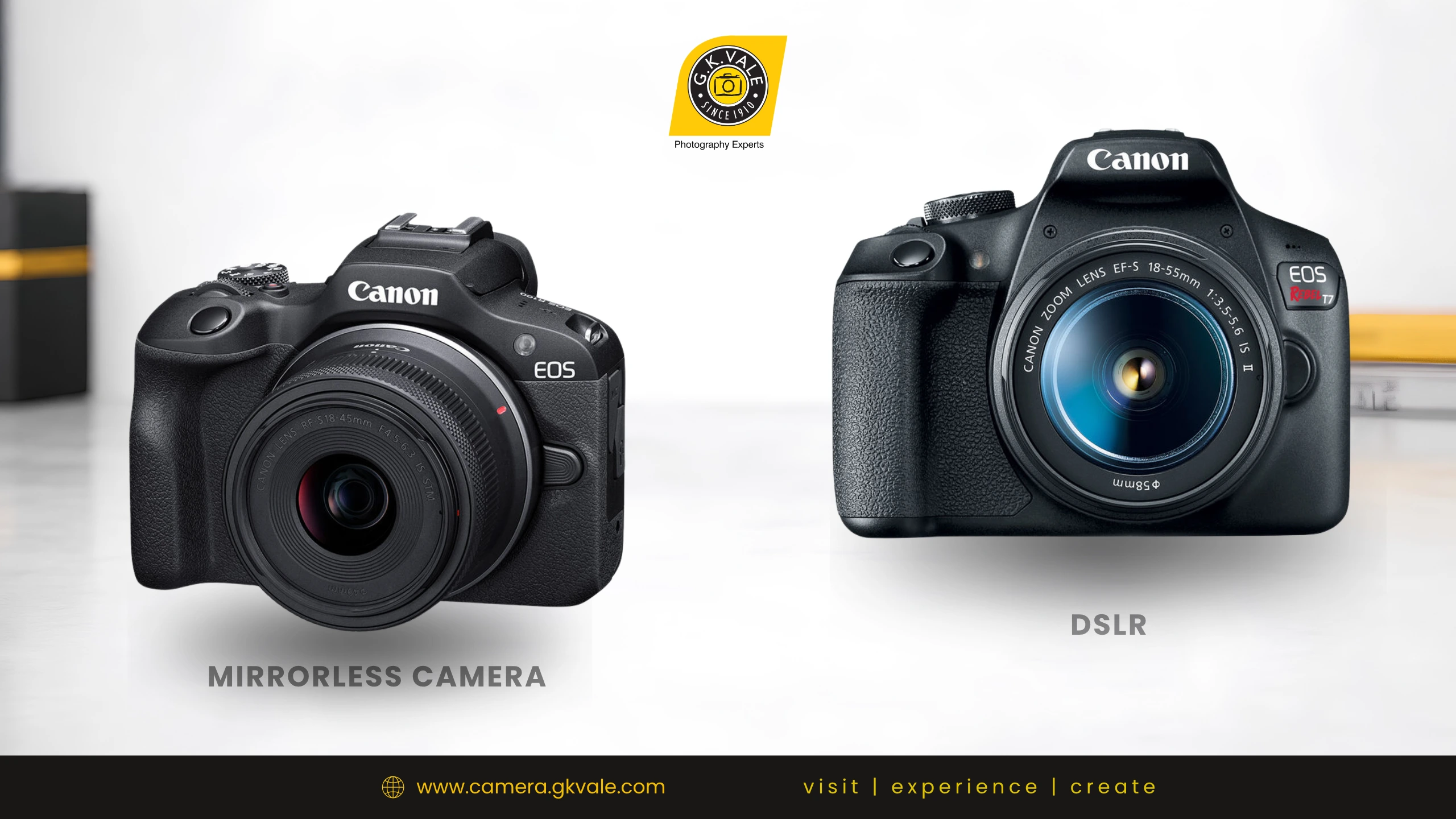
What Is the Difference Between DSLR vs Mirrorless Cameras?
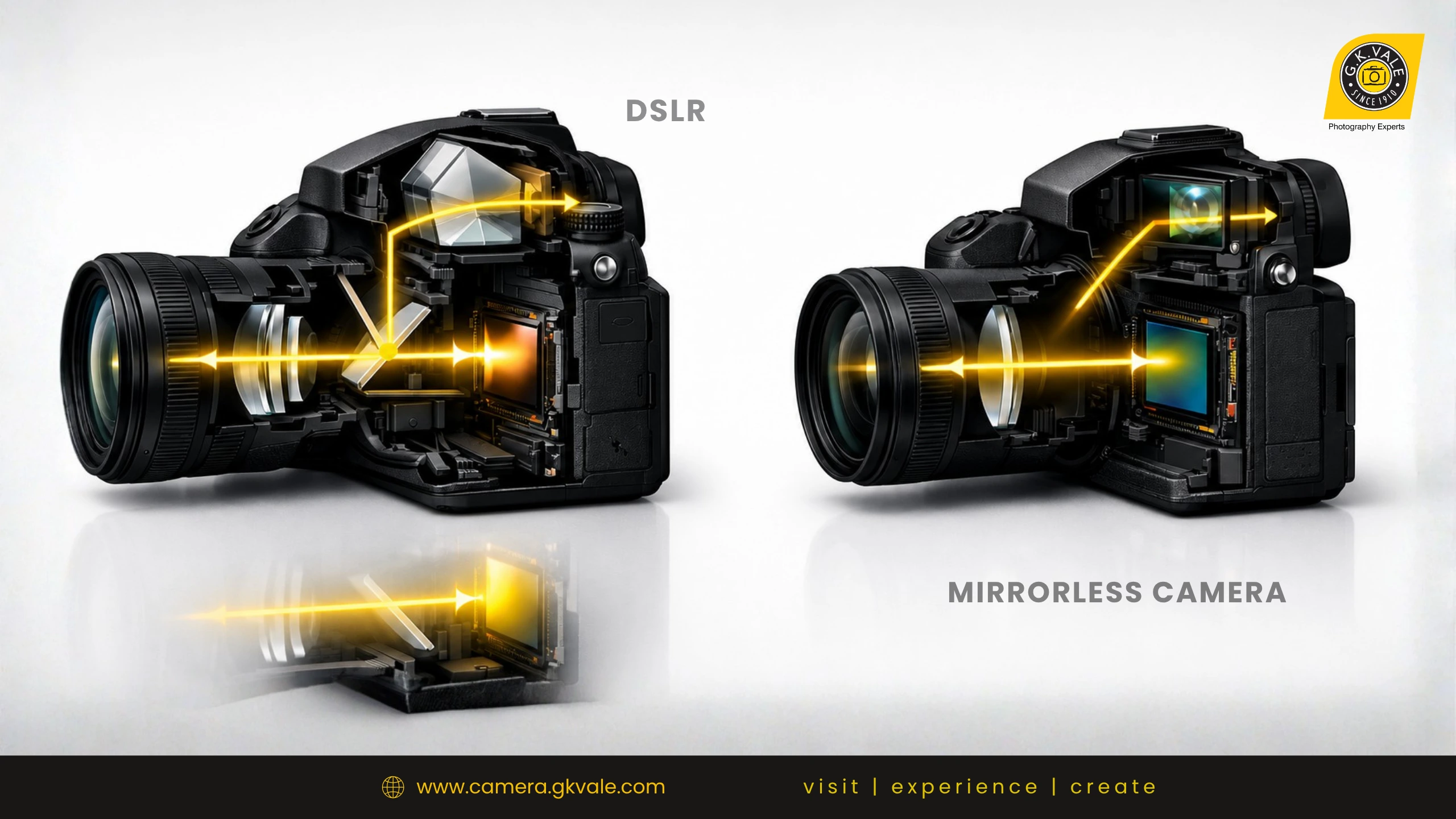
A DSLR uses a mirror to bounce light into an optical viewfinder. You see the scene through glass, in real time, with zero lag. A mirrorless camera removes that mirror completely. Light hits the sensor directly, and you compose your shot on a screen or electronic viewfinder.
That single design change explains almost every other difference here. No mirror means no mirror box, which is why mirrorless bodies end up smaller and lighter. It also means the sensor can constantly "see" the scene — the reason mirrorless autofocus and video are so much more advanced. An optical viewfinder, on the other hand, never lags and never drains the battery. DSLR bodies also come with decades of affordable lenses behind them. Neither system is simply "better." They're built around different trade-offs.
DSLR vs Mirrorless Camera: Which Is Better for Photography?
For pure image quality, the two are now essentially tied. Sensor size matters far more than mirror or no mirror. Both formats offer excellent full-frame and APS-C sensors at every price point.
Where they genuinely differ is how you get to that good photo. Mirrorless cameras show you a live, exposure-accurate preview before you even press the shutter. What you see is what you get, blur and all. DSLRs work differently — you set your exposure, then check the result afterward. For beginners learning photography, that instant feedback loop is a real, practical advantage. If you've already mastered exposure, though, you might prefer the DSLR's unfiltered, real-time view. That's exactly why its optical viewfinder still has loyal fans.
DSLR vs Mirrorless: Which Is Better for Video?
Mirrorless wins video, and it's not close. You get better autofocus tracking while recording, higher frame rates, and bodies designed video-first. Most DSLRs, after all, were never built with serious video in mind.
Think about the flagship video features that matter most: 4K at high frame rates, reliable autofocus tracking, and flip-out screens for vlogging. Almost all of them launch on mirrorless bodies first — sometimes exclusively. DSLR video still works, of course, and can even look great in controlled conditions with manual focus. But if video is even 30% of what you shoot — YouTube, reels, event coverage — mirrorless is simply the format built for it. It's not an afterthought bolted onto a stills camera.
DSLR vs Mirrorless: Which Is Better for Beginners?
For most first-time buyers today, an entry-level mirrorless camera is the easier starting point. Newer models have simpler menus. Their autofocus forgives beginner mistakes. And it's where brands are putting all their new lens development.
That said, "most beginners" isn't "every beginner." If budget is your deciding factor, a used or new entry-level DSLR is still the better call. DSLR bodies and lenses are cheaper on the used market — precisely because the industry has moved on. That's a genuine advantage, not a downside. On a tight budget, and wanting to learn manual exposure properly, a DSLR often gets you more camera for the money. But if you want the easiest, most forgiving experience — and plan to shoot video too — mirrorless is the better fit.
DSLR vs Mirrorless: Which Is Better for Wildlife Photography?
Mirrorless cameras now generally win wildlife photography. Their electronic shutters are silent, so they don't spook animals. They also offer faster continuous shooting and autofocus trained to detect animal eyes.
This is one of the clearest recent shifts in the industry. A few years ago, DSLRs held the edge here, mostly on lens reach and battery life during long stakeouts. Since then, mirrorless has closed the lens gap with dedicated super-telephoto glass. And animal-eye autofocus — a feature most DSLRs simply don't have — makes a real difference when a bird takes flight and you've got half a second to react. Still, DSLRs remain a solid, budget-friendly choice for wildlife shooters who don't need silent shooting and value all-day battery life on long treks.
DSLR vs Mirrorless: Which Is Better for Wedding Photography?
Most working wedding photographers today shoot mirrorless. The silent shutter alone is worth it — no shutter clatter during vows. Add in eye-tracking autofocus, and you get sharp focus on a moving bride and groom, even through a crowded, low-light reception.
Battery life is the honest counterpoint, though. A full wedding day means 8–10 hours of continuous shooting. DSLR batteries still outlast most mirrorless ones by a wide margin. That's exactly why many professionals still carry a DSLR as backup, even after switching their primary body to mirrorless. Either way, plan for extra batteries if you're shooting weddings as a business. Mirrorless silence and autofocus are why most studios are standardising on it.
DSLR vs Mirrorless: Autofocus, Battery and Performance
Autofocus goes to mirrorless. Its sensor-based autofocus covers nearly the entire frame, with eye, face, and animal detection most DSLRs can't match. Battery life goes to DSLR, though — optical viewfinders simply draw far less power than the screens mirrorless cameras rely on constantly.
| Feature | DSLR | Mirrorless |
|---|---|---|
| Autofocus (stills) | Fast in good light, weaker off-centre | Fast and accurate across nearly the whole frame |
| Autofocus (video) | Often needs manual focus | Reliable subject tracking |
| Battery life | Very long (500–1,000+ shots) | Shorter (250–500 shots) |
| Viewfinder | Optical — zero lag, no battery use | Electronic — shows exposure live, uses battery |
| Body weight | Heavier | Lighter, more compact |
| Burst speed | Good | Generally faster |
| Shutter noise | Audible mechanical shutter | Can shoot silently (electronic shutter) |
DSLR vs Mirrorless: Lens Selection and Cost
Right now, DSLR lenses are cheaper. Decades of production, plus a huge used market, mean you can build a capable DSLR kit for less. Mirrorless native lenses are newer and pricier. Their second-hand market is still catching up, though it's growing fast.
Here's the nuance worth knowing before you buy: most mirrorless systems can use an adapter to mount older DSLR lenses. That's a genuinely smart way to start mirrorless on a budget. You get the modern body, plus the cheaper, established lens ecosystem. And it's not just a stopgap, either — autofocus performance through adapted lenses has improved a lot. If lens cost is your main constraint, ask one of our experts about adapter compatibility for the mirrorless body you're considering.
Are DSLR Cameras Still Worth Buying?
Yes. DSLRs are not obsolete, no matter what the headlines imply. They're still genuinely excellent for stills photography. They offer the longest battery life of any interchangeable-lens camera. And they give you access to the cheapest, most mature lens market in the industry.
What's actually changed is direction, not quality. Shipment data from CIPA, the Japanese industry body whose members include Canon, Nikon and Sony, puts DSLRs at under 5% of cameras shipped in 2026, with mirrorless accounting for roughly 90% of interchangeable-lens shipments. DSLR lineups are no longer being actively expanded. That's worth considering if you want the newest sensor technology five years from now. It doesn't make today's DSLR a worse camera than it was last year, though. If you prioritise battery life, lens affordability, or a pure-stills workflow, a DSLR remains a smart, non-compromise purchase in 2026.
Should You Buy a DSLR or Mirrorless Camera?
Choose mirrorless if video matters to you at all. The same goes if you shoot wildlife, fast action, or want the lightest kit possible. Choose DSLR if you're stills-only, want the longest battery life and cheapest lenses, or you're building a first camera on a tight budget.
Quick decision checklist
- →Shooting mostly video or planning to vlog? Mirrorless
- →Photographing wildlife, sports, or fast-moving kids? Mirrorless
- →On a strict budget for your first camera? DSLR (or a used mirrorless body)
- →Shooting a full day of weddings/events and need battery life? DSLR as backup, mirrorless as primary
- →Want the lightest possible travel kit? Mirrorless
- →Already own DSLR lenses? DSLR, or a mirrorless body with an adapter
Still not sure after that list? That's exactly what a five-minute conversation is for — with someone who isn't trying to sell you the most expensive option. Bring your budget and tell us what you actually shoot. You'll walk out with the right camera, not just the trendiest one.
Conclusion: Making the Right Choice for You
DSLR vs mirrorless isn't really a rivalry anymore. Think of them as two mature toolkits, each with different strengths. The "winner" changes depending on whether you're asking about video, wildlife, weddings, battery life, or budget. Mirrorless has taken a clear lead in autofocus, video, and where new lens development is heading. DSLR still holds real, practical ground: better battery life, cheaper lenses, and a proven, no-surprises stills experience.
Here's the honest answer: there's no universally correct choice. There's only the correct choice for what you shoot, how you shoot it, and what you're willing to trade off. A wildlife shooter and a budget-conscious wedding photographer can both make the right call — and still end up with different cameras. Whichever way you lean, you're welcome to browse our Canon, Nikon, and Sony ranges online first, or look at other brands if you're considering something outside the big three.
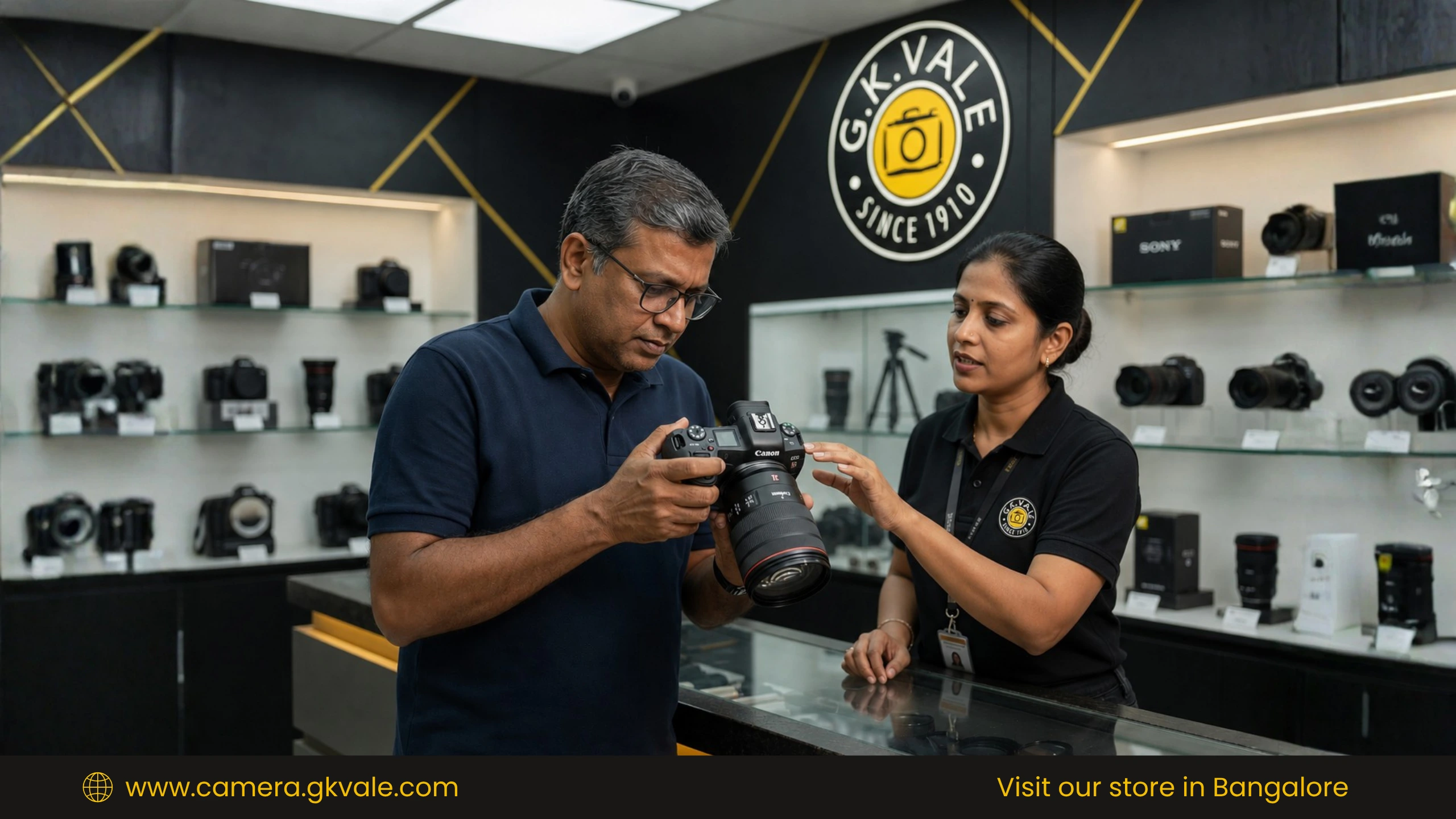
If real money is on the line, the fastest way to get clarity isn't another spec sheet. It's holding both formats in your hands. Better yet, talk through your actual use case with someone who repairs, sells, and shoots both every day. That's exactly what we've been doing at GK Vale in Bangalore since 1910. You can also check out Best Canon Camera Shops in Bangalore: What to Look For and Where to Go.
Still deciding?
Bring your budget and tell us what you shoot. Hold both formats before you commit.
Four stores across Bangalore
Frequently Asked Questions
What is the main difference between DSLR and mirrorless cameras?
A DSLR uses a mirror to reflect light up into an optical viewfinder, so you see the scene through glass. A mirrorless camera removes that mirror, letting light fall straight onto the sensor while you compose on a screen or electronic viewfinder. That one design change explains the size, autofocus and video differences between the two formats.
Is mirrorless better than DSLR for beginners?
For most beginners, yes. A mirrorless camera previews your exposure live before you press the shutter, which shortens the learning curve considerably. Menus are simpler on current models and autofocus is more forgiving. The exception is budget: if you're spending under ₹40,000, a used DSLR gets you more camera for the money while you learn.
Do DSLR cameras record video?
Yes, most DSLRs made in the last decade record video, and many shoot in 4K. The limitation isn't resolution — it's autofocus. DSLRs generally hunt for focus during recording because the mirror blocks the sensor's own focusing system, so serious DSLR video usually means focusing manually or keeping your subject still.
Which is better for wildlife photography, DSLR or mirrorless?
Mirrorless now leads for wildlife. Electronic shutters let you shoot silently without startling animals, burst rates are faster, and animal-eye autofocus tracks a moving subject in a way most DSLRs cannot. DSLRs remain a reasonable budget option for wildlife if you shoot from a hide and value all-day battery life over silence.
Which has better battery life, DSLR or mirrorless?
DSLRs, by a clear margin. An optical viewfinder is just glass and draws no power, so DSLR bodies commonly manage 500 to 1,000+ shots per charge. Mirrorless cameras run a sensor and a screen continuously, typically delivering 250 to 500 shots. If you shoot full days away from power, carry spares.
Is a DSLR still worth buying in 2026?
For stills photography on a budget, yes — a DSLR takes exactly the same quality photograph it did five years ago. What's changed is direction. Industry shipment data from CIPA shows DSLRs now make up under 5% of cameras shipped, and manufacturers have largely stopped developing new bodies and lenses for the format.
Can I use my old DSLR lenses on a mirrorless camera?
In many cases yes, using a lens adapter matched to your camera brand. Autofocus performance through adapters has improved considerably, making this a practical way to move to mirrorless without replacing your lenses immediately. Check compatibility for your specific mount before buying, as results vary between brands and lens generations.
What is the difference between SLR and DSLR?
An SLR (single-lens reflex) records onto film. A DSLR (digital single-lens reflex) uses the same mirror-and-prism design but records to a digital sensor and memory card instead. The optical mechanism is essentially identical — the difference is what captures the image at the back of the camera.
Which is better for wedding photography, DSLR or mirrorless?
Most working wedding photographers now shoot mirrorless. A silent shutter matters during vows, and eye-tracking autofocus holds sharp focus on moving subjects in dim reception lighting. Battery life is the trade-off on an eight to ten hour day, which is why many professionals still carry a DSLR as a backup body.
Pingback: Camera Buying Guide: How to Choose Right in 2026
Pingback: Best Camera for Beginners in India: 2026 Guide